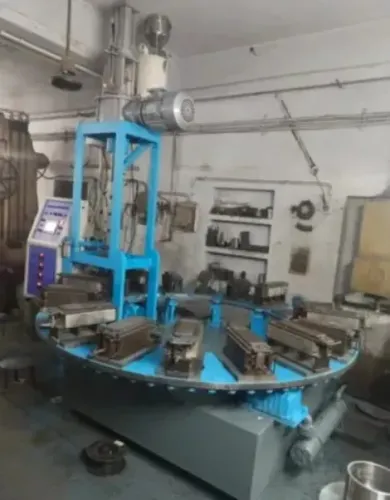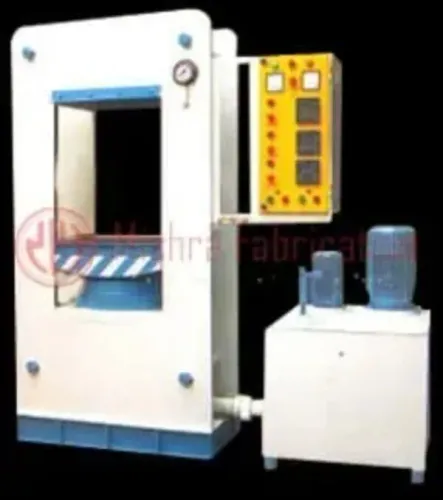
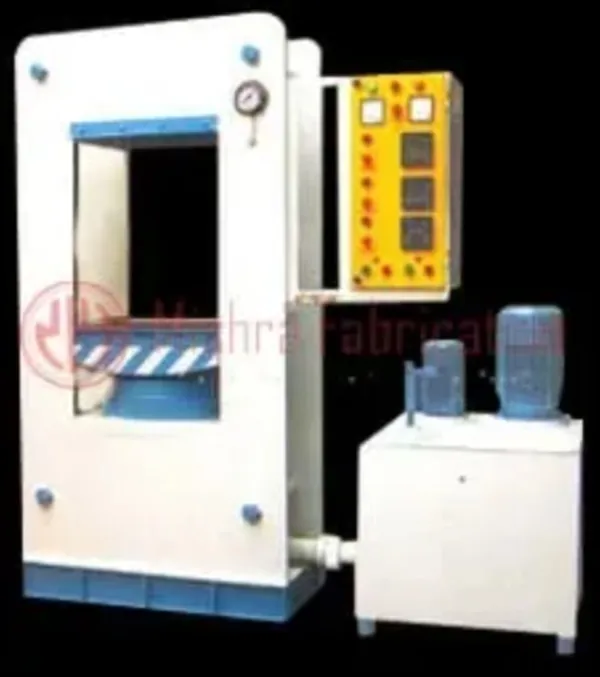
Uneven EVA soles usually result from a combination of mould alignment, charge weight, venting, temperature, and pressure distribution—not from low tonnage alone. By the end, you will know how to identify the fault, set up a press, measure the defect, and test a replacement machine before accepting its production claim.
Key takeaways
- Weigh every preform before changing machine settings.
- Check mould parallelism, temperature, and closing pressure separately.
- Measure sole thickness at matching points across each cavity.
- Run a timed trial before approving a new EVA press.
Find the source of uneven EVA pressing before changing the machine
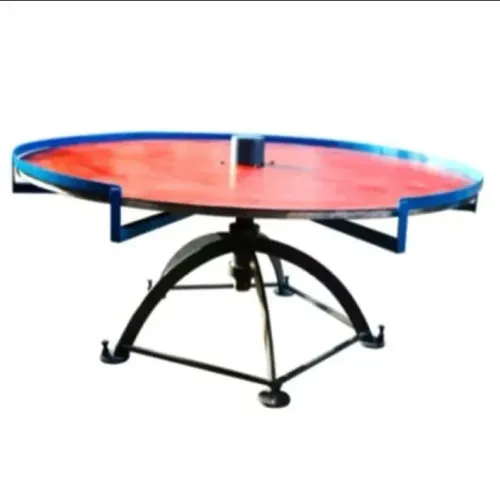
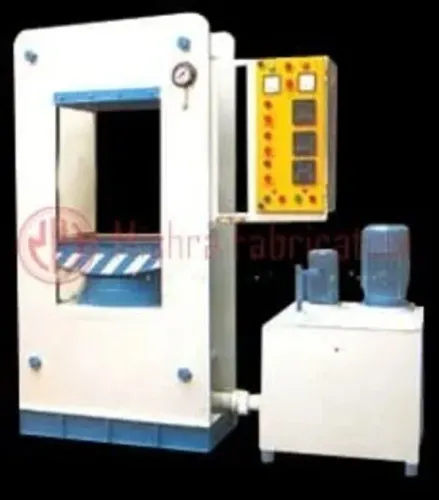
Start by proving whether the defect comes from filling or closing. A compression EVA sole machine for uneven pressing in New Delhi uses a weighed preform in a heated mould; an injection machine meters and plasticises compound before filling.
Changing to a different machine type will not correct an off-centre charge, blocked vent, or worn cavity.
Check these faults before increasing pressure or replacing equipment:
- An underweight preform or poor placement leaves thin spots and incomplete filling; an oversized or misplaced charge creates flash on one side.
- Blocked vents trap air, producing voids, low density, and local thickness loss instead of a clean fill.
- Unequal mould closing, platen misalignment, or a worn mould surface creates different thickness from left to right.
- Uneven heater temperature changes flow and expansion, causing density and hardness variation between heel, waist, and forefoot.
- Hydraulic pressure fluctuation or inadequate dwell prevents full compression; gauge pressure alone does not prove uniform force.
| Symptom | Likely source | Check before changing the machine |
|---|---|---|
| Thin heel or toe | Underweight or displaced preform | Weigh each charge and mark its cavity position |
| One-sided flash | Mould mismatch or platen tilt | Measure gap at all four corners |
| Low-density patch | Cold zone or blocked vent | Record mould temperatures and inspect vent grooves |
| Left-right thickness difference | Unequal closing force | Measure platen parallelism under load |
Record preform mass, mould temperature at several points, closing pressure, cycle time, sole thickness, and hardness at defined locations across three consecutive cycles. That baseline separates material and operator faults from machine drift.
Use a repeatable diagnostic sequence to separate filling, mould, and machine faults
Run the same mould, compound, and cycle three times before changing settings. A compression process uses a weighed EVA preform; an EVA injection process meters and plasticises compound before filling the cavity. Diagnose them differently.
- Record the baseline: preform mass, placement, mould temperature at several points, hydraulic pressure at load, dwell time, sole mass, thickness at heel, toe, sidewalls, and hardness across left and right sides.
- Check filling first. Weigh each charge and centre it in the cavity. An underweight or off-centre preform creates thin areas; excess material creates flash. Repeat with a verified charge before blaming the press.
- Inspect the mould. Clean blocked vents, check worn cavity surfaces, confirm both halves seat fully, and look for unequal flash around the perimeter. A blocked vent traps air and produces incomplete filling or local density differences.
- Check temperature next. Map each heating zone after stabilisation with a calibrated probe. A cold region can leave incomplete fill; an overheated region can soften the EVA early and shift material.
- Check pressure and alignment separately. Record pressure at full load, then verify platen parallelism, mould support, and closed-height repeatability. Gauge pressure is not mould pressure, and adding tonnage will not correct a tilted platen.
- Change one variable per trial and repeat the measurements. An automatic EVA sole pressing machine is useful only when its recipe, temperature, pressure, alarm, and cycle records expose which variable moved. A persistent left-to-right pattern points to alignment or seating; a random pattern points to charging, vents, or temperature.
Set mould level, temperature, charge weight, pressure, and cooling as one process
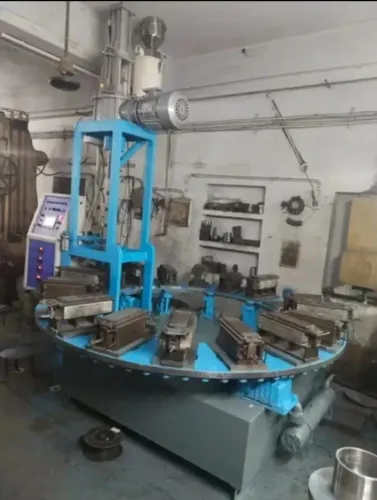
A stable cycle starts with a level mould and a recorded baseline, not a higher tonnage rating. Set these controls together on the eva sole production machine:
1. Verify platen parallelism, mould seating, closed height, and support points with feeler gauges or the machine’s alignment method. Correct a tilted mould before adjusting pressure; extra force will not fix unequal closing.
2. Map mould temperature at several cavity locations, then compare actual readings with the controller setpoint. Balance hot and cold zones, clean heater contacts, and hold the specified temperature long enough for the mould to equalise.
3. Weigh every EVA preform to a defined tolerance and mark its placement in the cavity. An off-centre or overweight charge creates thin areas, flash, or density differences that machine pressure cannot correct.
4. Set closing speed, hydraulic pressure, and dwell time as one recipe. Confirm pressure at load rather than relying on the nominal rating, and record whether pressure holds throughout dwell.
5. Keep the mould closed during the defined cooling period before demoulding. Early opening can let the sole distort, even after filling and curing were correct.
For compression moulding, validate this recipe with the actual preform; an injection process uses different plasticising, metering, and filling controls. Save the recipe, cycle time, alarm history, and cycle counter, then repeat the baseline after maintenance: platen parallelism, pressure, temperature map, preform mass, sole mass, thickness, and hardness.
That record reveals whether the next uneven batch came from machine drift, compound change, mould wear, or charging practice.
Measure sole thickness and validate output with a timed production trial
Approve an eva sole making machine in New Delhi only after a trial with your actual EVA compound, colour, mould, preform weight, and planned cycle. A demonstration using the supplier’s material can hide charging, filling, or cooling problems.
Record these acceptance checks before the trial:
- Measure thickness at marked heel, waist, forefoot, toe, and left- and right-sidewall points. Set the maximum allowed spread and left-right difference in writing.
- Weigh each sole and calculate density or specific gravity from mass and volume. Compare results across consecutive cycles, not one sample.
- Measure hardness at defined heel, waist, and forefoot locations after an agreed conditioning time. Specify the Shore scale, specimen geometry, test force, and allowable spread.
- Inspect every sole for flash height, short filling, voids, surface sinks, and incomplete detail.
- Check mould temperature at several platen or cavity points, platen parallelism, hydraulic pressure at load, and actual cycle time.
Run the machine for an agreed number of consecutive cycles using a freshly weighed, consistently positioned preform. Count only accepted soles, including normal loading, closing, dwell, cooling, opening, and demoulding time; then calculate accepted soles divided by elapsed trial hours.
A quoted rate fails if it depends on skipped cooling, exceptional operator speed, or rejects being counted as output.
Repeat the measurements at the start, middle, and end of the trial. Stable thickness, mass, density, hardness, appearance, and cycle time prove repeatability—not simply a good first sole.
Choose a press that matches your mould, formulation, utilities, and repeatability needs
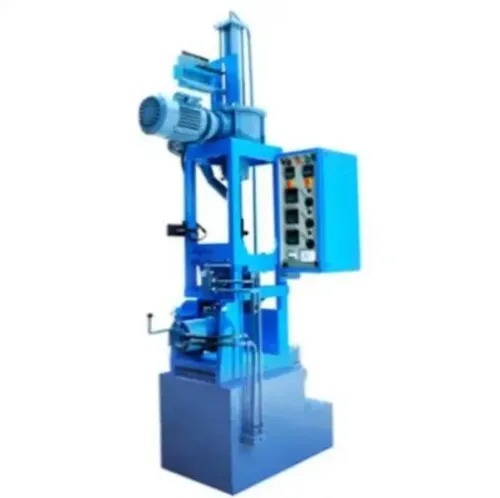
Compare compression and injection presses first: a weighed EVA preform in a heated mould needs different tooling and controls from compound metering and injection. An injection machine is not an automatic replacement for a compression press.
| Compare | What to verify | Why it matters |
|---|---|---|
| Mould fit | Usable mould area, daylight, closed-height repeatability, platen parallelism, support and levelling method | Unequal seating creates heel-to-toe or left-to-right thickness differences |
| Force and control | Rated closing force, force distribution, dwell control and hydraulic stability; do not compare gauge pressure alone | Gauge pressure is not mould pressure |
| Utilities | Connected load, voltage, phase, frequency, cooling water or chiller, compressed air, floor loading, extraction and interlocks | Voltage fluctuation, dust and cooling limits affect New Delhi uptime |
| Validation | Trial with your compound, colour, mould, preform weight and cycle | A single good sample proves little |
Choose automatic operation when the same mould, charge and cycle run repeatedly at production volume, and labour variation is causing missed charges or inconsistent closing. Choose manual or semi-automatic operation when you change moulds and formulations frequently, produce short runs, or need lower controls complexity; automation will not correct blocked vents or a warped mould.
Before accepting an eva sole machine manufacturer in Delhi, map thickness at heel, waist, toe and both sidewalls, then check mass, density, hardness at defined locations, flash, voids and left-right dimensions across consecutive cycles. Ask Mishra Fabrication to document those acceptance readings alongside the machine’s utility and repeatability limits.
Related products
 | Automatic Sole Pressing Machine ₹550000 Capacity(Pairs/Hour) 900 Production Capacity 900 Power Consumption 21 kw Weight 3 ton Country of Origin Made in India Established in the year 1970,... View product → |
 | EVA Forming Machine EVA Forming Machine is designed for efficient shaping and forming of EVA materials used in footwear, slippers, soles, sports shoes, and other molded... View product → |
Frequently asked questions
How do you find the source of uneven EVA pressing?
Compare a weighed preform with the finished sole, then inspect filling, mould alignment, machine pressure, and cooling in sequence.
Which settings affect EVA sole thickness and pressing consistency?
Set mould level, temperature, charge weight, closing pressure, and cooling time as one linked process.
How should you validate an EVA sole machine after adjustment?
Measure thickness at matching points and run a timed production trial using the intended mould, compound, and operating conditions.
What should you compare before choosing an EVA sole production machine?
Check mould dimensions, formulation requirements, heating and cooling utilities, automation, output rate, and repeatability under production conditions.
Keywords